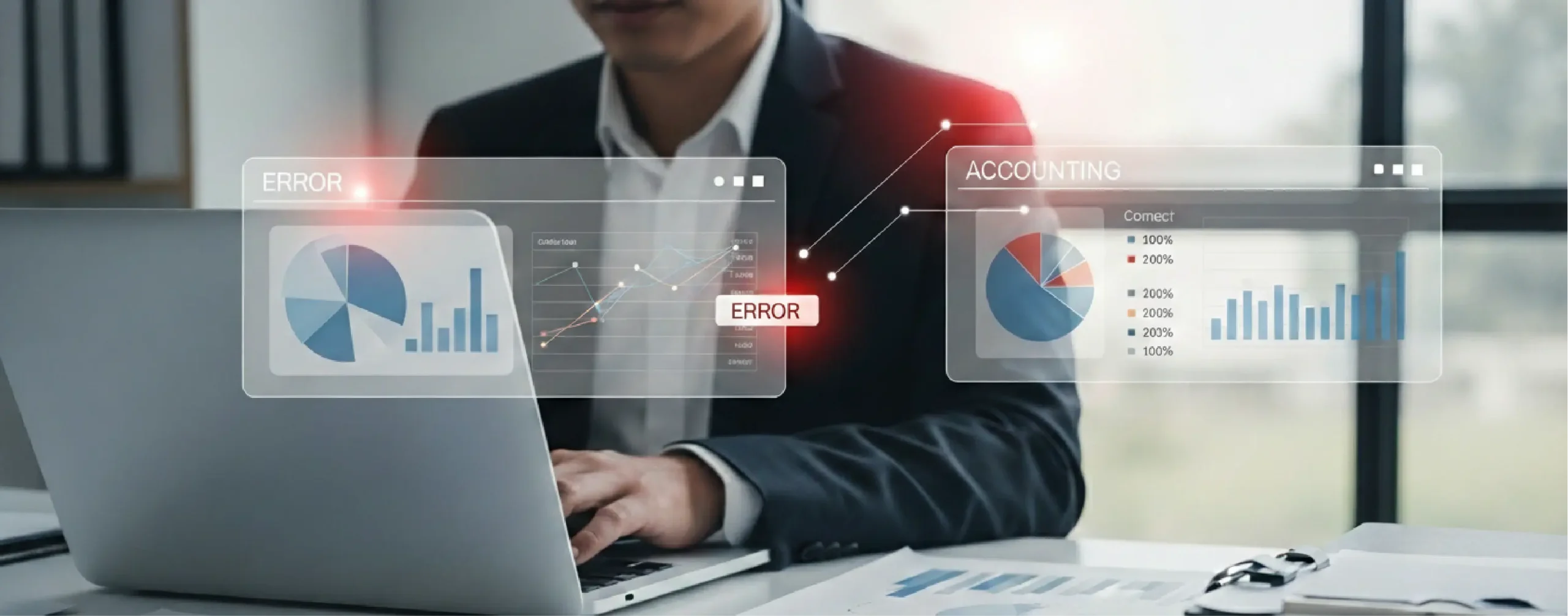
Common Accounting Errors Businesses Should Avoid
When you are building a business, it is tempting to handle your own accounting. In the early days, every dollar counts, and doing the books yourself can seem like a smart way to cut costs. But tracking income, expenses, payroll, taxes, and vendor payments is more complex than it looks. Small errors can slip in quietly, and over time, they can turn into late tax filings, cash flow problems, penalties, or even legal trouble.
Many business owners repeat the same accounting mistakes without realizing the long-term consequences for their business. Poor recordkeeping, missed deadlines, and unclear financial reports can lead to decisions based on guesswork instead of facts. The good news is that most accounting errors are preventable. With the right systems, simple checks, and a bit of forward planning, you can protect your business and build a stronger financial foundation from day one.
Understanding Accounting Errors in Business
An accounting error is an unintentional mistake made when recording, classifying, or reporting financial transactions. These errors can happen at any stage of the accounting process, from entering journal entries to preparing final financial statements. They often result from simple data entry mistakes, misclassified transactions, duplicate postings, outdated software, or missed entries.
Unlike fraud, which involves deliberate manipulation, accounting errors occur accidentally and are usually corrected once discovered. However, even honest mistakes can distort financial reports, mislead decision-making, and create compliance issues. Identifying and fixing accounting errors quickly is essential to keep your records accurate and your business financially stable.
How Accounting Errors Affect a Small Business
Running a small business requires careful financial control. Every decision, payment, and investment depends on accurate numbers. When your financial records are not properly managed, the consequences can build quietly in the background.
For small businesses, accounting errors can do more damage than many owners realize. When you are working with tight margins and limited cash flow, even a small mistake can have a ripple effect. Misrecorded income or expenses can lead to overpaying taxes, missing supplier payments, or underestimating available funds. Over time, these errors chip away at profitability.
Inaccurate financial statements also make it harder to make smart decisions. If the numbers are not reliable, it becomes difficult to plan growth, control costs, or secure funding. On top of that, mistakes can lead to compliance issues, fines, or unwanted attention from tax authorities.
Beyond the financial impact, repeated errors can hurt your credibility. Suppliers, lenders, and investors rely on accurate information. When trust is shaken, rebuilding it can be far more costly than fixing the books in the first place.
Common Accounting Errors Small Businesses Should Avoid
Running a small business means wearing many hats, and accounting is often one of them. But even small bookkeeping mistakes can quietly grow into bigger financial problems. Clean records are not just about tax compliance. They help you understand your cash flow, control costs, and make confident decisions. Here are some of the most common accounting errors businesses should avoid.
1. Mixing Personal and Business Finances
Using the same bank account or card for both personal and business expenses creates confusion and messy records. It also raises red flags during audits and makes it difficult to track true business performance. Keeping finances separate from the beginning simplifies bookkeeping and protects your business legally.
2. Poor Record-Keeping
Missing receipts, incomplete entries, or delayed data entry often lead to inaccurate financial reports and lost tax deductions. Disorganized records also make tax season stressful and increase the risk of compliance issues.
3. Not Reconciling Bank Statements
When business owners fail to match their accounting records with bank statements, errors and even fraudulent transactions can go unnoticed. Over time, these discrepancies can distort financial statements and create serious cash flow confusion.
4. Ignoring Small Expenses
Small purchases may seem insignificant, but they add up quickly. Failing to record minor expenses affects budgeting accuracy and may result in missed deductions at tax time.
5. Misclassifying Expenses
Incorrectly categorizing expenses can distort profit and loss reports and create tax complications. For example, recording a large equipment purchase as a routine expense instead of an asset changes how profits are calculated.
6. Poor Cash Flow Management
Many business owners focus on revenue but overlook cash timing. Profit on paper does not always mean money available in the bank. Weak cash flow management can lead to late supplier payments or difficulty covering operating costs.
7. Missing Tax Deadlines
Late tax filings often result in penalties, interest charges, and unnecessary stress. Repeated delays may also attract unwanted attention from tax authorities.
8. Not Backing Up Financial Data
Losing financial data due to technical failures, cyberattacks, or theft can disrupt operations and make compliance extremely difficult. Without backups, recovering records can be costly and time-consuming.
9. Trying to Do Everything Yourself
Many business owners attempt to handle complex accounting tasks on their own to save money. However, small errors can lead to costly penalties, missed deductions, and inaccurate reporting.
Avoiding these common accounting errors helps protect your cash flow, reduce financial stress, and build a stable foundation for growth. With consistent attention and the right systems in place, small businesses can stay organized and financially secure.
Best Practices to Avoid Accounting Errors
Preventing accounting errors is far easier and less costly than fixing them later. The start of a new financial year is the perfect time to put strong systems in place. A proactive approach not only protects your business from penalties and cash flow issues but also gives you reliable numbers to make better decisions throughout the year. Here are five practical best practices every business should follow:
1. Strengthen Internal Controls
Clear internal controls reduce the risk of mistakes and fraud. This includes separating key duties so one person is not responsible for recording, approving, and reviewing the same transaction. Establish approval processes for payments and maintain proper documentation for every financial activity. Even small businesses can create simple checks and balances that make a big difference.
2. Use Reliable Accounting Software
Modern accounting tools automate repetitive tasks, reduce manual data entry, and flag potential errors in real time. Features like bank feeds, duplicate detection, and automatic reconciliations significantly lower the chances of human error. Cloud-based systems also improve accessibility and data security.
3. Reconcile Accounts Regularly
Reconciliation should never be treated as optional. Matching your books with bank statements, supplier records, and customer accounts helps catch discrepancies early. Monthly reconciliations allow you to fix small issues before they grow into larger financial problems.
4. Invest in Ongoing Training
Accounting standards, tax regulations, and software tools change over time. Regular training keeps your team updated and confident in their roles. Even basic refresher sessions can reinforce good habits and improve accuracy.
5. Seek Professional Support When Needed
No business owner needs to handle everything alone. Working with an experienced accountant provides an extra layer of oversight and guidance. Professional advice helps ensure compliance, improves financial planning, and reduces costly errors.
Creating a culture that values accuracy and consistency is essential. When financial processes are structured, reviewed, and supported properly, businesses can operate with confidence and focus on long-term growth instead of correcting preventable accounting mistakes.
Frequently-Asked Questions
1. What are the most common accounting mistakes businesses make?
Some of the most common mistakes include mixing personal and business expenses, failing to reconcile bank statements, misclassifying transactions, and delaying data entry. These errors often lead to inaccurate records, tax complications, and compliance issues that can become costly over time.
2. Why is it important to avoid accounting errors?
Avoiding accounting errors helps maintain accurate financial records, manage cash flow effectively, and simplify tax filing. It also builds trust with investors, lenders, and clients. Most importantly, it reduces the risk of penalties, audits, and unnecessary financial stress.
3. How can I make sure I don’t miss small expenses?
Use expense-tracking software or a mobile app and record payments immediately. Making this a daily habit ensures that even minor purchases are captured and accounted for properly.
4. Why is reconciling bank statements important?
Bank reconciliation ensures your accounting records match your actual bank balance. It helps detect errors, duplicate entries, missed transactions, or even fraud before they escalate.
5. What happens if I misclassify an expense?
Misclassifying expenses can distort financial reports and result in incorrect tax filings. This may lead to penalties, inaccurate profit calculations, and confusion when reviewing business performance.
6. Should I handle accounting myself or hire a professional?
If your finances are simple, basic bookkeeping software may be enough. However, as your business grows, hiring an accountant or outsourcing your accounting can save time, improve accuracy, and prevent costly mistakes.
7. Are small accounting mistakes really harmful?
Yes. Even minor errors, such as forgetting to record small expenses or missing a tax deadline, can create larger problems like cash flow issues, penalties, or damaged credibility.
8. How often should I review my financial statements?
Review key financial reports, such as your profit and loss statement, cash flow statement, and balance sheet, at least once a month. Regular reviews help you spot issues early and make informed decisions.
9. When should a startup hire an in-house accountant instead of outsourcing?
Startups often outsource accounting in the early stages to reduce costs. Hiring an in-house accountant makes sense when transaction volume increases, financial complexity grows, or strategic financial planning becomes a priority.
10. What are the risks of not separating personal and business expenses?
Mixing expenses creates bookkeeping confusion, increases audit risk, and can weaken legal protection for your business. It also makes tracking profitability much harder.
Closing Thoughts: Protecting Your Business from Costly Accounting Errors
Strong accounting practices are not just about balancing the books. They give you clarity, confidence, and control over your business decisions.
Accounting errors may seem small at first, but they can quickly grow into serious financial and operational challenges. Understanding the common accounting errors businesses should avoid is the first step toward protecting your financial health. Most accounting mistakes are entirely preventable. With clear processes, reliable technology, and regular oversight, you can safeguard your business from unnecessary penalties, cash flow disruptions, and compliance issues.
If you want expert support in strengthening your financial operations, Arthur Lawrence Finance and Accounting Services can help. From bookkeeping and reporting to payroll and strategic financial management, our team delivers accurate, scalable solutions tailored to your business needs. Connect with us for our Finance and Accounting Services and take the next step toward stronger, more reliable financial management.